Seattle to Lusaka: Cognative Dissonance
Posted on | May 14, 2012 | No Comments
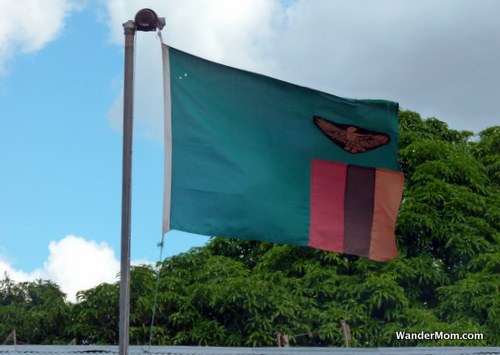
I returned from Zambia barely 48 hours ago.
I’m happy to be home with my family.
I enjoyed being fussed by my boys on Mother’s Day.
But.
Today I’m back at work. My stomach is tied in knots and I’m nauseous.
I work for Google. I like working for Google. I usually enjoy what I do. I work with great, smart, fun people.
But.
(I knew I’d feel like this).
It’s hard to care about online advertising after spending a week learning about literacy programs in Zambia.
Zambia is home to 12 million people and had a GDP of US$21 Billion in 2011. Per-capita GDP is $1,600.
I saw and experienced that poverty first-hand every day last week.
Google employs about 32,000 people and made US$37 Billion in 2011.
I feel extreme cognative dissonance today. To work and be productive is good. To help people in a developing country is good. To experience such extremes of how people live and work in such a short time is really, really hard.
My trip to Zambia to visit the libraries built by Passports with Purpose in 2011 is sponsored by Expedia.
Like what you’ve read and interested in reading more? Subscribe to the WanderMom rss feed, follow me on Twitter or become a fan on Facebook.
Related Posts
[catlist tags=Zambia numberposts=-1]
Lusaka Bus Station
Posted on | May 11, 2012 | 2 Comments
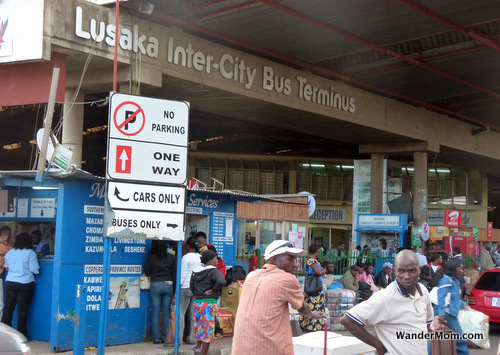
On our last day in Zambia I had a family errand to run in a town called Mazabuka about two hours south of Lusaka. Initially I’d planned to hire a taxi although given that the half-hour taxi ride from the airport into Lusaka cost ~$25, I was worried that my round-trip to Mazabuka would be ridiculously expensive. But, all advice I’d been given before arriving in Zambia was consistent: “It’s pretty safe, just don’t wander around on your own”. When I explained my plans to one of the Room to Read guys, he shook his head and said: “Why don’t you just take a bus?”. Coming from an ex-teacher who seemed pragmatic and honest, I thought, “Well, why the hell not?”. So I did.
I’m not going to pretend that I wasn’t nervous when I went to the noisy, dusty, chaotic bus station on my own or that my heart wasn’t hammering in my chest as I was getting on the bus. I was and it was but I had a fantastic day. I talked to so many people all of whom were open, welcoming, generous and friendly. I felt as safe as houses. On Africa-time, it did take a whole day to get there and back and I was more than a little grubby getting on to my flight that evening but it was absolutely worth the effort.
Head on over to DeliciousBaby for more travel-themed Friday photo fun.
My trip to Zambia to visit the libraries built by Passports with Purpose in 2011 is sponsored by Expedia.
Like whaLike what you’ve read and interested in reading more? Subscribe to the WanderMom rss feed, follow me on Twitter or become a fan on Facebook.
Related Posts
[catlist tags=Zambia numberposts=-1]
Lusaka Experience Township Tour
Posted on | May 9, 2012 | No Comments

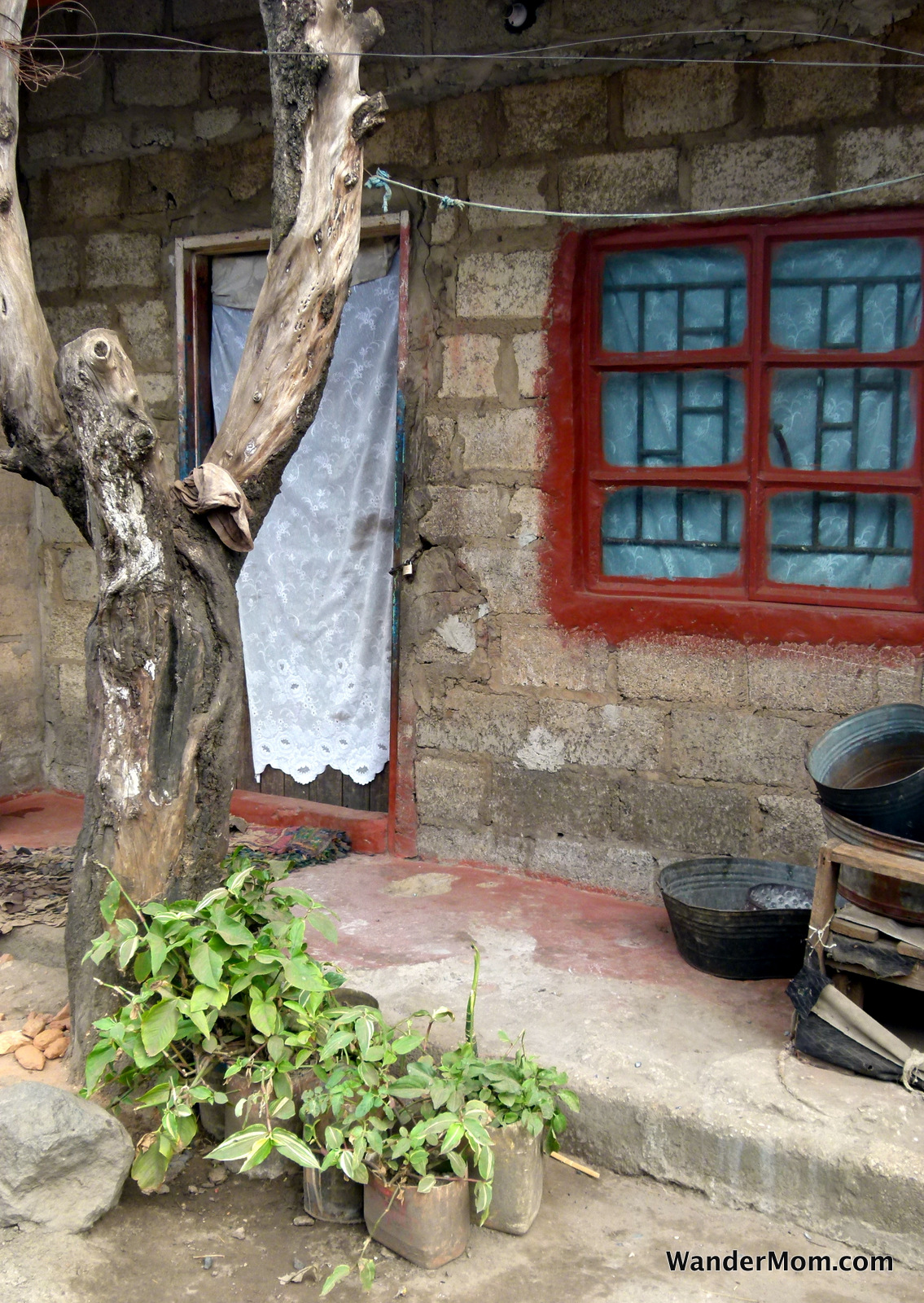
We spent yesterday morning on the three-hour tour of the Garden Compound (township) hosted by the inspirational folks from Lusaka Experience. This neighborhood of 26,000 people crammed onto unserviced, unpaved streets where their 2-room cinder block homes are built on what was once a garden is an example of the environment where most of Lusaka’s 2 million residents live.
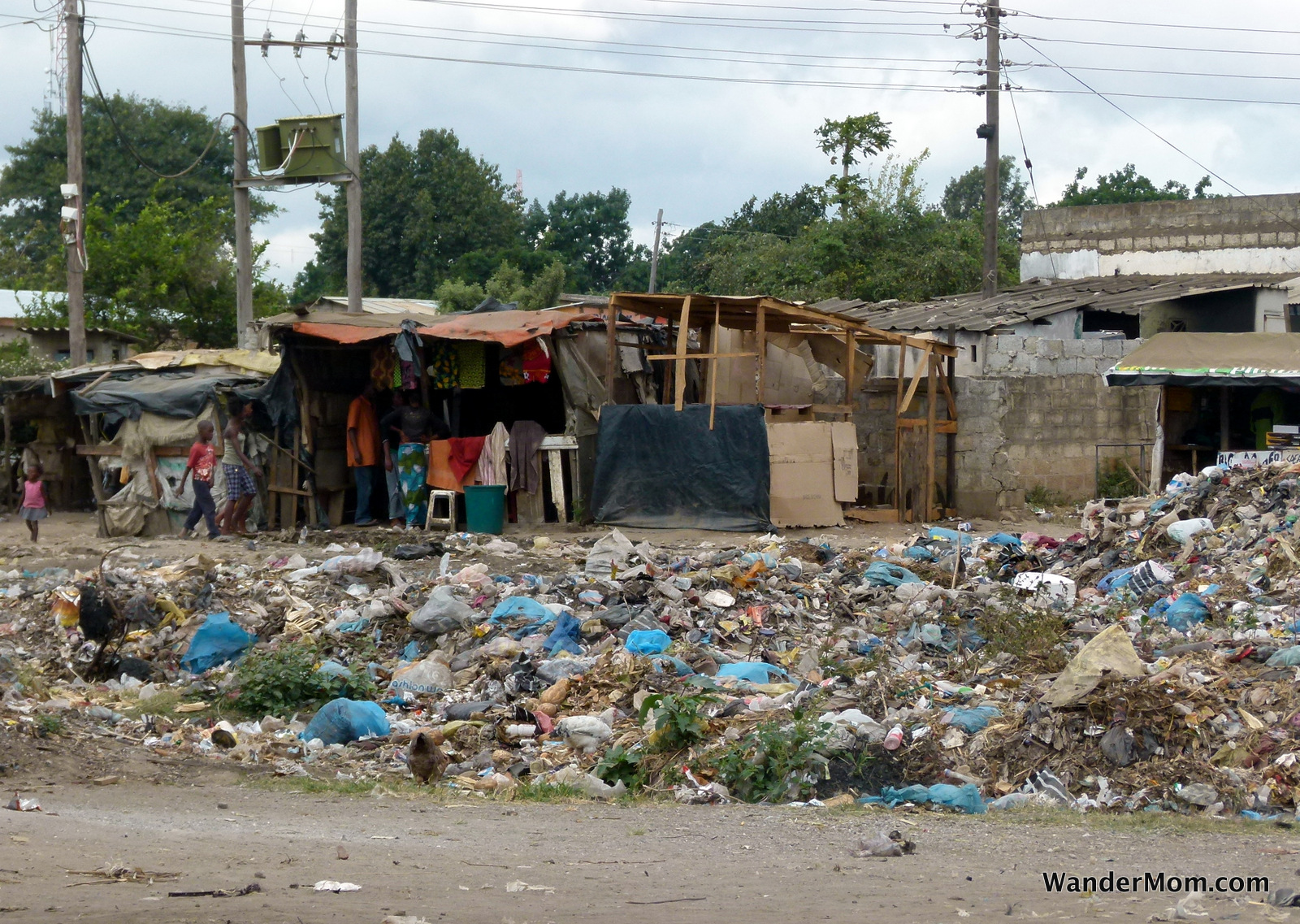
Coming from any developed country it’s difficult to really appreciate what it means to have no basic residential services until you see streets where garbage is piled up with kids playing right nearby.
The houses here do not have running water and no indoor toilets. There are water taps in the neighborhood which the residents pay to use to fill containers of water to bring to their homes.
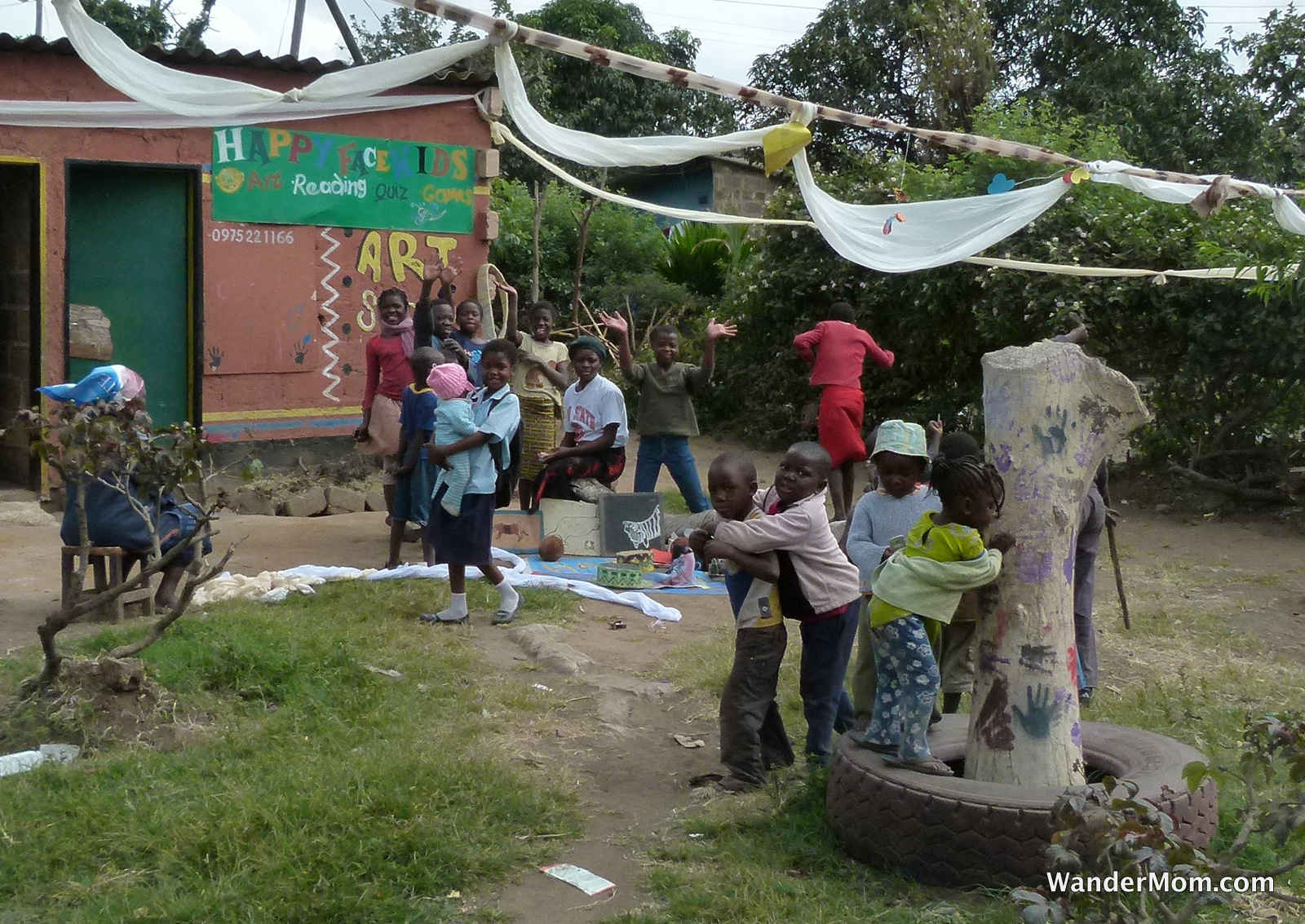
One of our tour stops was to visit the Happy Face center a resource center for neighborhood kids supported in part by the Lusaka Experience team. Many of the kids who come here do not go to school because the only basic (primary) school in the compound is over-subscribed. The center provides a space for kids to explore arts and crafts with simple drawing and craft-work.
Everywhere we went in the compound kids called out MuZungu, the local slang for “white person” and like kids everywhere they never tired of waving, calling out “Hello” and following us around.
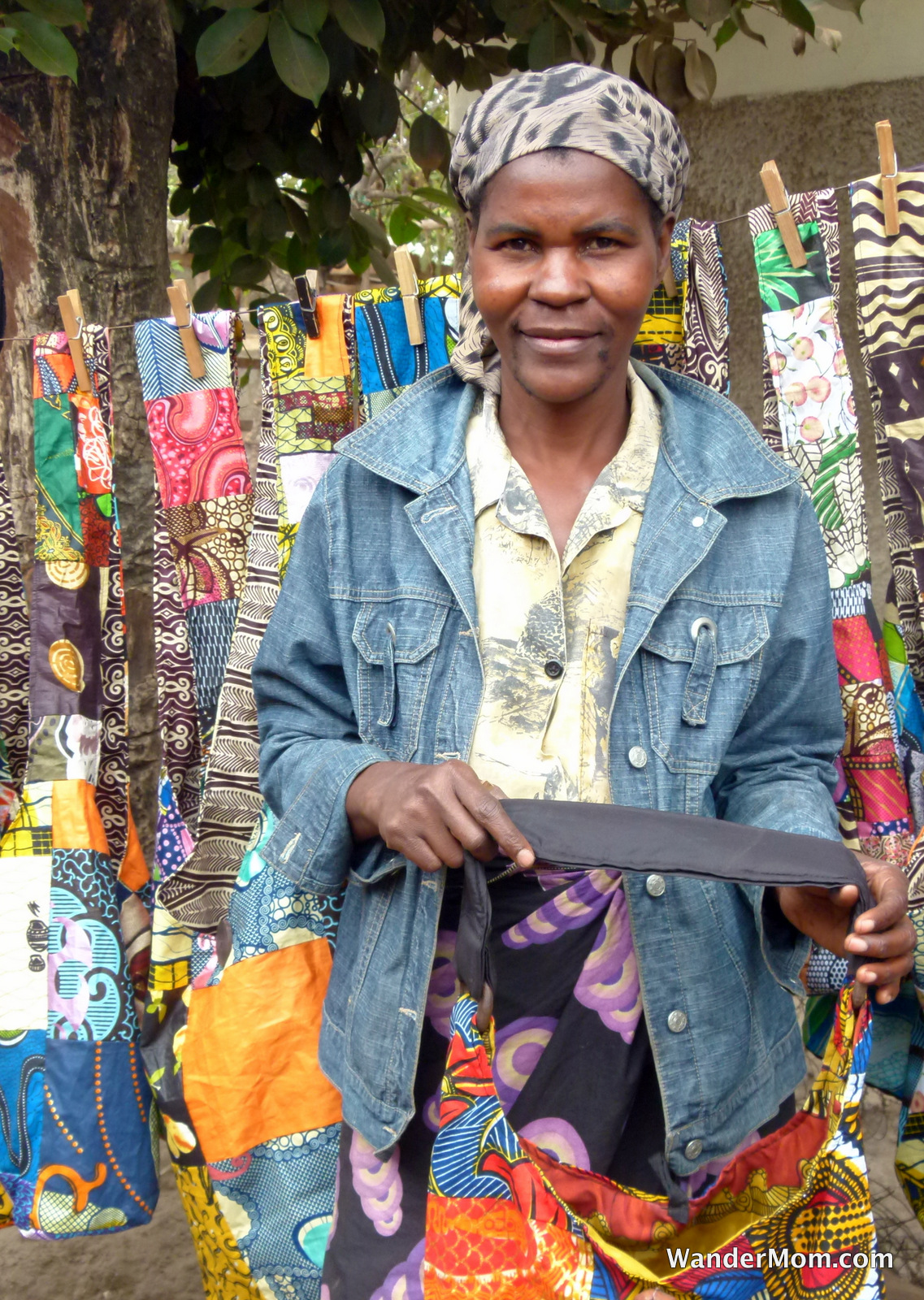
The high point of the tour for me was a visit to this local craftswoman’s house where she takes chitenge cloth (the traditional women’s dress worn wrapped around as a long skirt) and re-makes it into fun bags and purses.
My trip to Zambia to visit the libraries built by Passports with Purpose in 2011 is sponsored by Expedia.
Like what you’ve read and interested in reading more? Subscribe to the WanderMom rss feed, follow me on Twitter or become a fan on Facebook.
Related Posts
[catlist tags=Zambia numberposts=-1]
Seattle to Lusaka: First Impressions of Zambia
Posted on | May 8, 2012 | 1 Comment

I may pretend to be a blogger/writer but really I’m a list-maker. Honestly, any time you’ve read a blog post that I’ve written there’s a 99% chance that it started it’s life as a list. Here’s a sample of the lists I’ve written about Lusaka and Zambia in the last 24-48 hours (links to stats added for this post).
What I knew about Zambia before I arrived:
- That it’s one of the poorest countries in the world (#31 based on 2010 data).
- That the rates of HIV/AIDS infection here are among the worst in the world (globalhealthfacts.org).
- That malaria is a chronic problem here (nationmaster.com).
- That literacy rates are low (unicef.org).
- That Zambia had a peaceful transition from British colonial rule to independence in 1964.
- That the first post-colonial leader was Kenneth Kaunda (aka KK) who stayed in power for 27 years.
- The Victoria Falls are on the Zambezi between Zambia and Zimbabwe.
Things I learned while on my way here (guidebook-less, I might add):
- To prepare me for what to expect in Zambia, the Saudi couple who I met on my way from Dubai to Johannesburg advised that “while South Africa is part-European, part-African, Zambia is all-Africa.”
- A South African hydrologist who met on the plane from Johannesburg to Lusaka – and who has worked all over Africa – suggested that Zambia is one of the most fertile countries in Africa. “Anything will grow there.”
- That “Zambia has very little of the black-white racial tension that you still see in South Africa and Namibia” – from the German agriculture and forestry specialist – on his 7th trip to Zambia in the past two years – who I shared dinner with on my first night here.
- Jeremiah, a Zambian forestry specialist who joined us at dinner, shared that “Kenneth Kaunda required that children attend secondary school and attend it in a different area of the country from where their parents were living. This was and is a big factor behind the lack of racial and inter-tribal tensions here”. It appears that the national motto, “One Zambia, One Nation”, holds true even though there are more than 60 tribes in this country.
Given all that, here are my first impressions of Lusaka and Zambia:
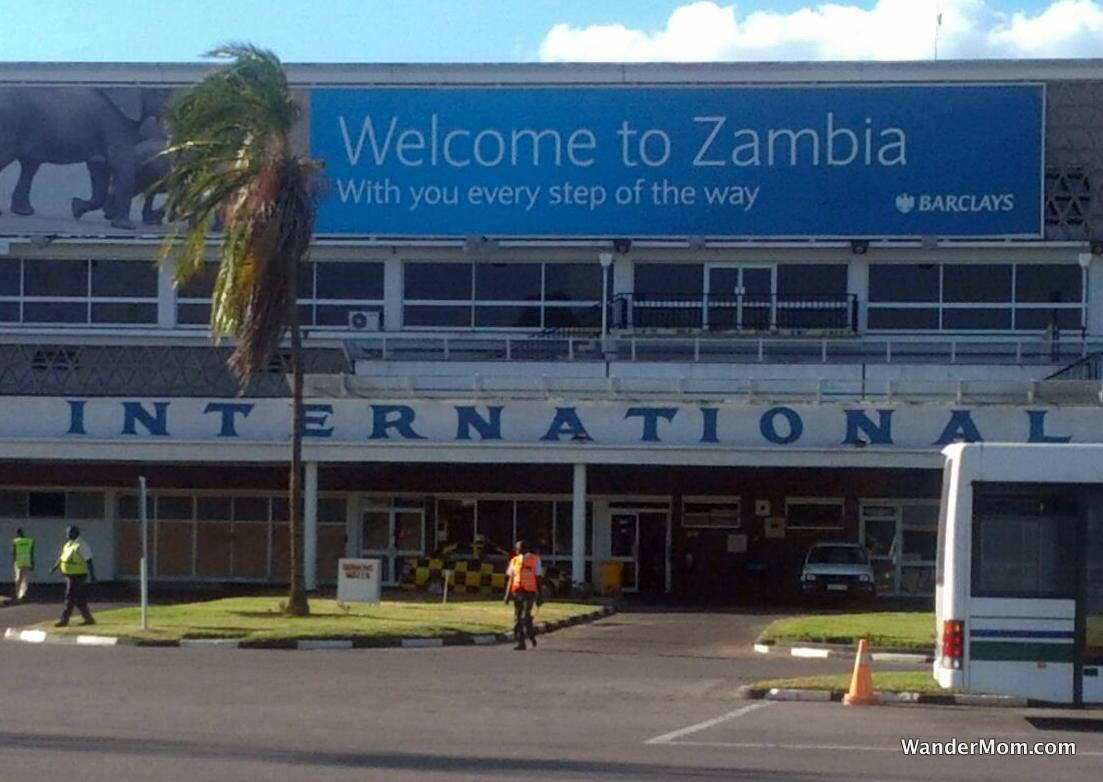
The single-runway Kenneth Kaunda International airport in Lusaka looks like it was built in the 60s and hasn’t been updated much since. It’s got low ceilings, graffiti over the windows and one rickety luggage belt. Passport control was four officers in small booths although they did have computers, digital cameras and digital fingerprint readers. It reminded me of a smaller version of Shannon airport before it’s latest upgrade.
There’s a prominent Bank of China billboard greeting passengers on the walkway from the plane into the terminal building. It may be that this jumped out at me because I’ve been reading the Economist’s reports on Chinese investments in Sub-Saharan Africa (http://www.economist.com/blogs/dailychart/2011/04/chinese_africa).
As our taxi left the airport, I noticed first three girls with their thumbs out trying to hitch a ride, then a small group of people waiting on the roadside and then a South American-style collectivo (shared minibus) trundling to pick them up. I’ve since since blue and white collectivos all over the city. Just like in South America, the wide open windows and jam-packed vehicles make me suspect that these no-frills, no-air-conditioning minibuses are the most common form of public transit for locals.
Although, given the constant streams of people walking on the dirt tracks alongside the roads, it appears that there either aren’t enough collectivos or that even these super-cheap buses are too expensive for many people in this city of about 2 million.
On the way from the airport to my hotel, obviously alerted by the Bank of China sign, I counted at least three Chinese restaurants and Chinese signs on businesses. Today, while walking during the evening rush-hour, I noticed that the trucks filled with laborers (usually sitting or standing in the truck bed) which passed on the road had Chinese drivers. I guess this is the Chinese investment in Africa in the flesh.
There were two billboards that caught my eye on the way in from the airport. The first was a government warning about pediatric HIV/AIDS and the second had a picture of a good-looking couple and the following text: “Having an affair? Don’t tell your husband but what about HIV?” Direct messaging I guess.
Zambia is much, much greener than I was expecting. There are many colorful trees and plants. I’ve seen advertisements for roses as well as a kid selling what looked like orange tree saplings on the side of the road. I wish I had a sub-tropical plant book with me. I’m just going to have to take lots of photo and put Google goggles through its paces when I get home. Seriously, it does seem that anything will grow in this red dirt.
Many homes and buildings are behind high broken glass topped walls with gates and armed guards. The data I could find on this says that petty crime is high here although not usually violent and avoided by taking simple precautions such as not going out alone at night. So far, I’ve found every single Zambian I’ve interacted with to be welcoming and very friendly.
Zambia is not cheap but not ridiculously expensive either – at least not in the affluent/tourist bubble that I’ve experienced so far. I’ve been taking mostly taxis which cost ~$10 for a 30-minute ride. A (very tasty) chicken curry dinner with a beer cost $18. Spar is a full-sized grocery store chain here (as opposed to the 7-Eleven style in the UK and Ireland). The one next to our hotel is well-stocked with a curious mix of mostly British brands but some local, some South African and Parmalat (Italian) dairy products.
For my kids (because I suspect a trip to Zambia could be in your future): you can check out things to do in Zambia and Lusaka on Zamazing.com.
My trip to Zambia to visit the libraries built by Passports with Purpose in 2011 is sponsored by Expedia.
Like what you’ve read and interested in reading more? Subscribe to the WanderMom rss feed, follow me on Twitter or become a fan on
Seattle to Lusaka: Zambia Family Ties
Posted on | May 7, 2012 | 3 Comments
Now that I’m in Lusaka, and before our visit with the Room to Read people starts, I thought I should explain the other reason for my excitement and interest in being here: my husband and four of his siblings were born here. The lived in the very region that I will be visiting over the next four days – where one of the libraries funded by Passports with Purpose in 2011 was built. These facts are bizarrely coincidental.
Murph’s parents returned to Ireland when he was five. He has barely any memories of living here. That he’s “from Africa” is a factoid that each of our kids pondered on – and shared with teachers, friends and random strangers – until they each deemed it (appropriately) an irrelevant description of their Dad. For his parents, on the other hand, living and working in Zambia is an important part of their life story. On our recent visit with them Murph told his Mom that I would be going to Zambia:
“To Mazabuka even.”
“Really? Because of the charity work that you and your friends do? That’s fantastic. Jim, did you hear, Michelle’s going to Mazabuka”, she turned to her husband and reached for his arm.
He didn’t reply. They held hands and the look that passed between them made me feel as if four decades had just fallen away and I was looking at their newly-wed selves.
In the 18 years that I’ve know them Zambia has rarely come up in conversations and if it has, it’s been in fun or when talking about history (which Murph’s Dad, Jim, taught). This was the first time that I considered how important that time in their lives must be to them. Newly wed and recently qualified as teachers they went to teach at a Catholic boarding school outside of Lusaka. They left Zambia six years later and neither they, nor any of their “Africans” have been back since.
“It was such a wonderful time”, Brenda said.
“But all the kids…” (they had five children including a set of twins in those six years).
“We had a cook and a nanny and a houseboy. It was easy. I can’t imagine what it would have been like if we’d been in Ireland.”
“Were all the teachers Irish?” I asked.
“There were a lot of Nordies*” Jim answered, “Catholic. Easier for them to get work there than at home.”
The oddities of the political and economic situations in Ireland North and South in the late 60s and early 70s summed up neatly in just that one sentence.
I’ve just arrived in Lusaka. It’s late and I’m too tired to think straight so I’ll focus instead on the serendipity of the path I’m following. I’m in the steps of two teachers who I love dearly. This visit is giving me the opportunity to see the place where they started their life and family (let’s not forget my all-important husband). They taught here, I’m here to visit a school. They gave their time and skill. I’ve been lucky enough to work with a group of great people to raise money to extended the resources of two rural schools in Zambia. Life. Even the oddest coincidences can be only marvelous.
*People from Northern Ireland
My trip to Zambia to visit the libraries built by Passports with Purpose in 2011 is sponsored by Expedia.
Like what you’ve read and interested in reading more? Subscribe to the WanderMom rss feed, follow me on Twitter or become a fan on